This essay was written as a student project for HIST 7250: Practicum on the Place-Based Museum.
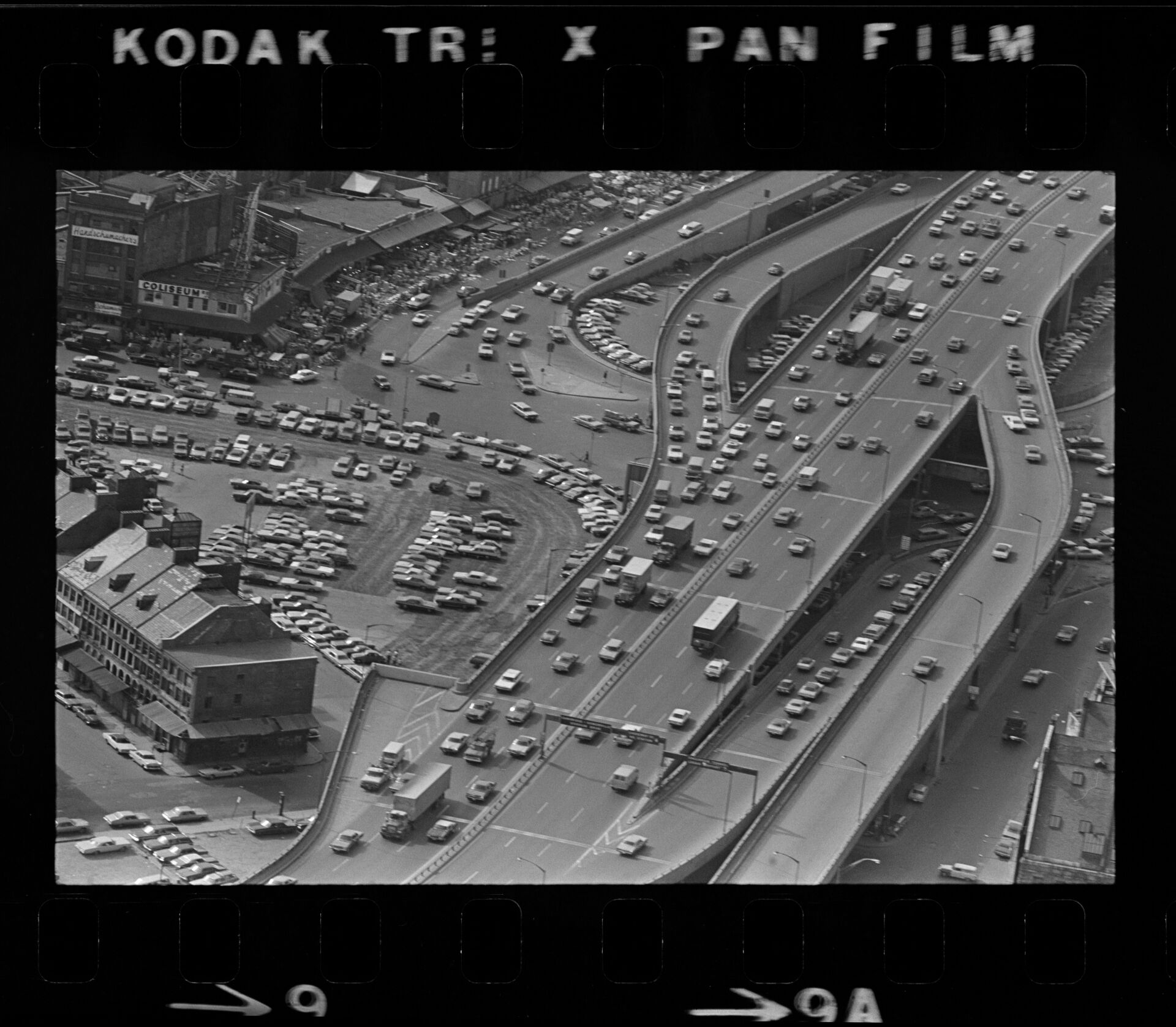
The 1.5 mile expanse of vibrant greenery and interactive structures which is the Rose Kennedy Greenway offers the oppurtunity for both visitors and locals alike to escape the weight of urban life in Boston, if only for an afternoon. Yet if we were to step back 30 years, the land stretching from Chinatwon to the North End would have looked quite different. The tantalizing aromas ascending from the lines of of local food trucks, the excited cheering from children after first seeing the fountains or the carousel, and the subsquent capitulation of loving parents in agreeing to ride said carousel, would all be gone. In their place, a cacophony of car horns and sirens would mix with the sickly-sweet scent of exhaust fumes, forcing the Rose Kennedy Greenway into becoming a distant memory of the future.
Constructing Destruction
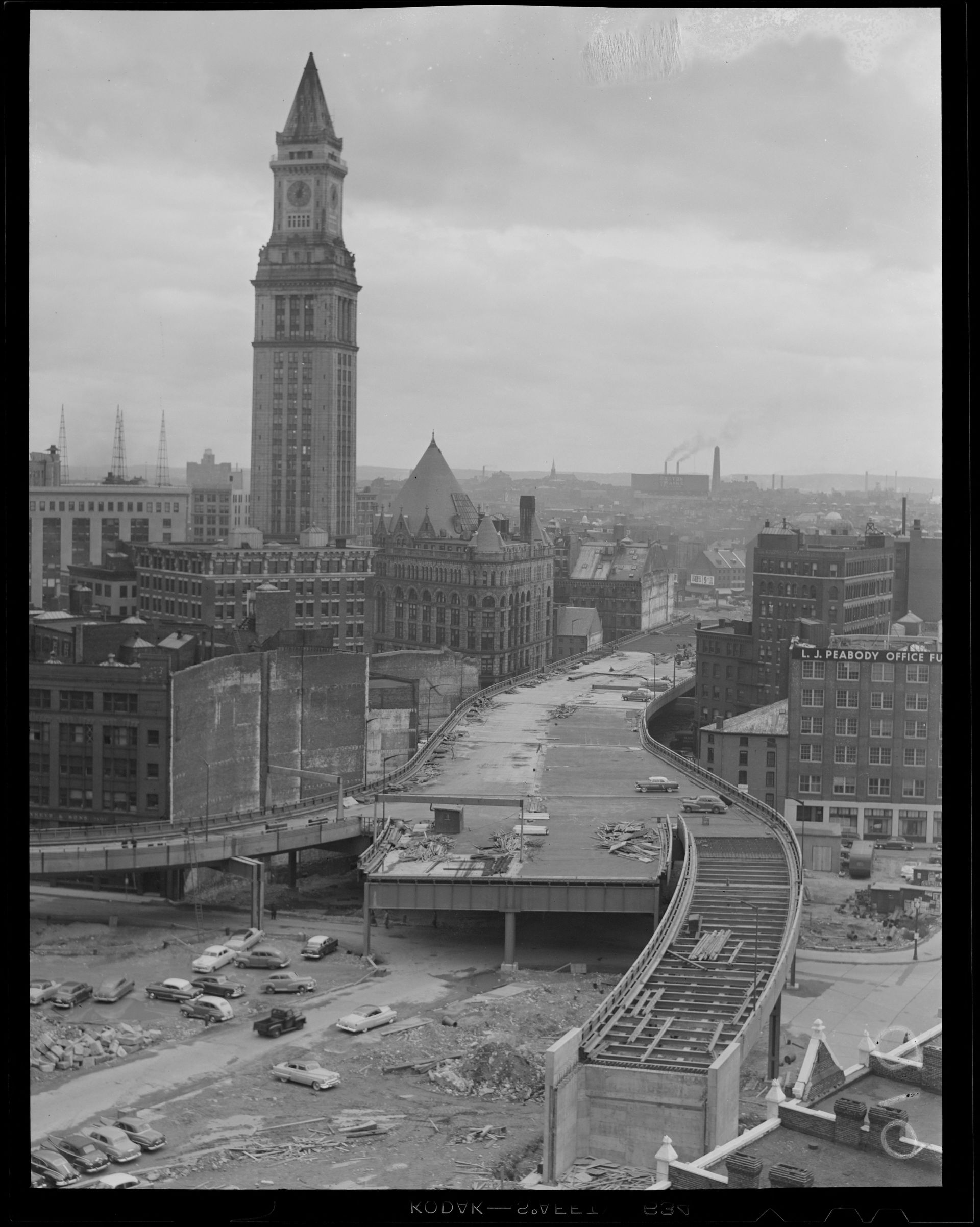
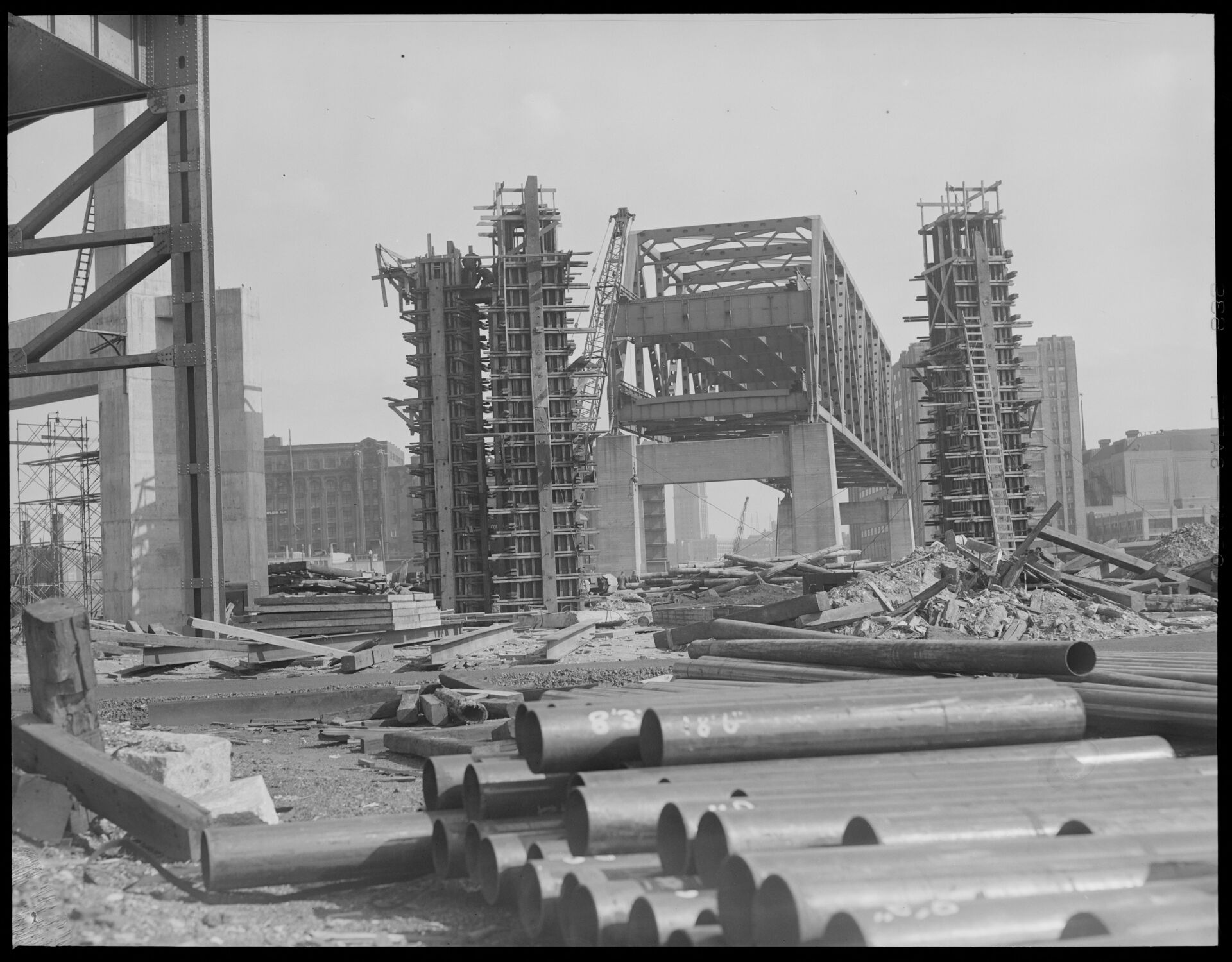
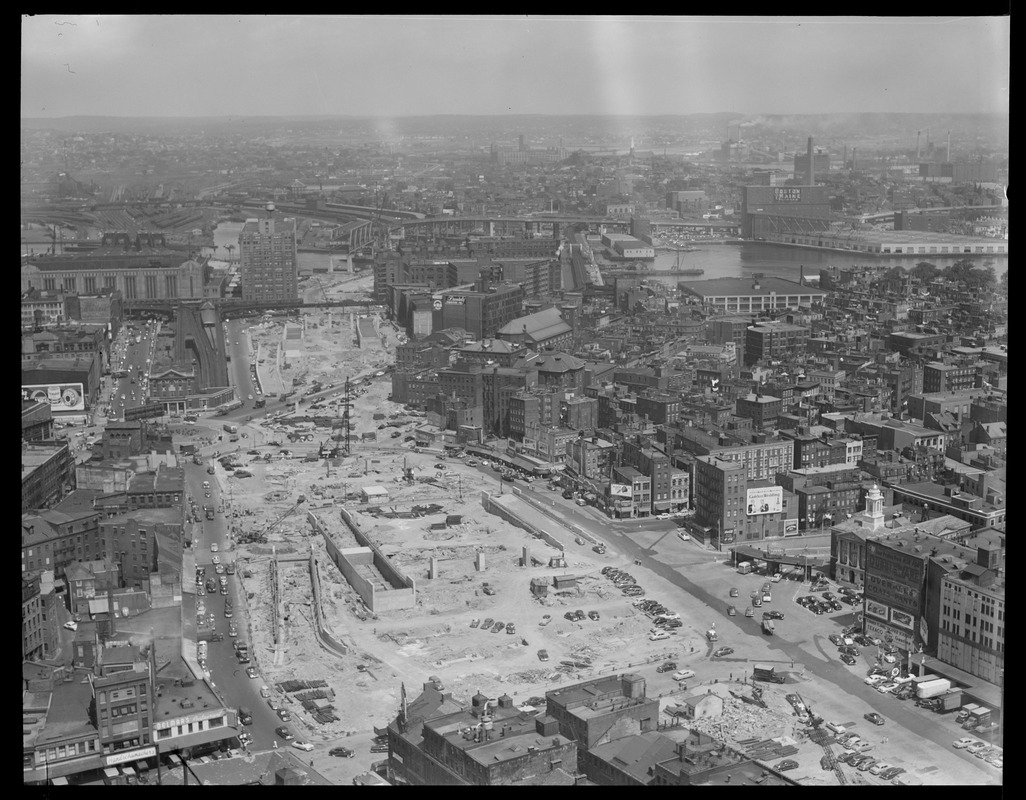
Prior to the Greenway’s development, Boston’s Central Artery pierced through the heart of the city’s downtown neighborhoods like a barbed arrowhead, almost as destructive to remove as it was going in. The issues surronding the massive infrastrucral project far surpassed the purely aesthetic, as its history, from construction in the 1950s to the final piece of steel being removed in 2004, is marred with destruction. Just south of the Greenway’s current placement sits Chinatown, one of Boston’s staple neighborhoods which was both literally and figuratively divided by the Central Artery’s construction. Through a closer, albeit abbreviated look into the past of this neighborhood and its communal reaction to the project, we are offered the oppurtunity to better understand the stories of displacement and resistance which shaped the decades long discourse surronding the Central Artery.
Early Warnings
On a Sunday morning in the fall of 1950, the weekly edition of the Boston Globe was delivered to mailboxes and corner stores across the city. Page twelve of this paper contained a seemingly innocous article titled “Big Traffic Artery to Span City”, announcing the beginning of the Central Artery’s construction the following month.
 Model of the proposed Central Artery included in this Boston Globe edition (September 3, 1950)
The brief article laid out the timing of job opening releases, details on funding, and other pieces of mundane information. Towards the end of the article, a quote from Public Works Commissioner William Callahan is included, in which he assures that “some familes and some businesses will be hurt temporarily”, then goes on to describe those who will suffer as merely “victims of progress.”
And yet, Callahan firmly states that “the people of the City of Boston will greatly benefit.”
While the inhabitants of Boston, and those of Chinatown in particular would most certainly not benefit, Callahan was correct in asserting that there would be victims. In fact, throughout the four years it took to construct a majority of the highway, 20,000 Bostonians would be displaced, approximately 2.5 percent of the city’s population in 1850.
Chinese immgration to the Boston area began to surge in the second half of the 19th century, with earlier immigrants coming directly from the southern provinces of China amid food shortages and overpopulation. Chinese immigrants were also brought from California to supplant local workers, primarily shoemakers, who had gone on strike. In large part due to local xenophobia and abject racism, the Chinese Exlusion Act of 1882 was passed by the U.S congress, stopping futher immigration. Despite the act’s passage, by the turn of the 20th century, over 1,000 Chinese, almost exclusively working-age males, were living in Boston, a majority of whom were living in the area between Essex and Beach Streets which would enventually be universally known as Chinatown.
 Late 19th c. Postcard of Harrison Ave in Boston’s Chinatown
It was not until 1943 that the Chinese Exclusion Act was repealed, largely with the goal of strengthening ties with the Chinese government. Chinese immigration was still heavily restricted, allowing for 105 immigrants per year, some of whom included Chinese ‘war brides’ who had married American soldiers. Despite the restrictive laws and race-baced social exclusion Chinese immigrants had been perpetually facing, there was ample evidence of strong, unified community building. Laundries were the primary occupation for Chinese immigrants living in Boston dating back to the intial wave of immigration, and by 1900, nearly 90 percent of the Chinese inhabitants in Massachusetts were laundry workers, often working out of one- or two-man operations. As more famlies began to inhabit Chinatown instead of solely ‘male bachelors’, these laundry businesses became family affairs, further contributing to the growing sense of commmunity. Chinese grocery stores, schools, restaurants, and communal areas began appearing with growing frequency, and despite outside perspectives riddled with anti-Chinese sentimets, the unified identiy of Boston’s Chinatown grew stronger.
Deja Vu, from the El to the Central Artery
Half a century before the Central Artery cut through Boston’s Chinatown, the Washington Street Elevated railway was constructed, running directly through the heart of the neighborhood. The anti-Chinese sentiments which hung over the city like a sprawling cloud was used as justification for the placement of the railway, and the physical disruption it caused was expected to push the Chinese immigrants out of the city. While the project did bring squalid living conditions and dramitically decreased value for property owners, those who left the area were not Chinese immigrants who had begun to build a community. In fact, they were the only ones to stay, due in large part to the city’s exclusionary policies which would make finding a new home, a new job, and a new community nearly impossible. This resulted in a futher increase in the growing sense of community which shaped the neighborhood, even as the city they called home tried to push them out. Today, if a Bostonian was asked about the El, they would likely describe the luxury condos which were recently built in Boston’s South End, unaware of the past exclusionary associations with these two simple letters.
50 years after the construction of the railway, plans for the Central Artery project were announced. For the inhabitants of Chinatown, most of whom who would have had a personal connection to the detrimental effects of the El’s construction, refused to sit idly by while their community was once again torn apart. The proposed elevated highway would cut off Chinatown from the rest of the city, and required the destruction of residential homes and businesses. When combined with the ever-growing population of the neighborhood, a housing crisis was imminent. In response, the On Leong Merchants Association reached out to the state governer in attempt to save the neighborhood. While construction would still continue, changes to the plan were made which would save the neighborhood from reaching the same fate as the West End, which was completely destroyed during the project. While hundreds of inhabitants were still displaced, the core sense of community in Chinatown survived. The resistance displayed by indivduals and groups like the On Leong Merchants Association set the tone for the remainder of the century. The Central Artery was not the first, nor was it the last urban renewal project which would threaten the existence of Chinatown, and listed below are a number of sources which will guide you through later periods of displacement and resistance in much greater detail.

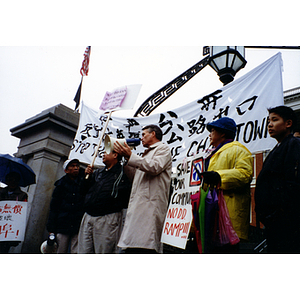
1993 Protest against the plans for the the Parcel C parking garage in Chinatown. These plans would be shot down as a result of the backlash.
And the Greenway?
While the Rose Kennedy Greenway has barely been discussed througout this essay, the essence of what it symbolizes should now be clear. Urban projects have consquences, and it is crucial to recognize that these consquences are not faced equally by all. The decision to construct the Greenway as a part of the Big Dig project was not an isolated decision made by urban planners, but the result of a century of resistance against destruction, resistance which is evident through the continued existence of Chinatown.
Sources
https://thewestendmuseum.org/history/era/immigrant-neighborhood/destruction-and-disappointment-the-legacy-of-bostons-central-artery/
https://graphics.boston.com/beyond_bigdig/news/artery_122902.htm
https://bostonglobe.newspapers.com/image/433522866/?match=1&terms=Central%20Artery%20Boston
https://ur.bc.edu/system/files/2025-04/bc-ir9100034.pdf
https://thewestendmuseum.org/history/era/immigrant-neighborhood/destruction-and-disappointment-the-legacy-of-bostons-central-artery/
https://bostonresearchcenter.org/digitizing-bostons-powerful-chinatown-neighborhood-history/
https://www.chinatownatlas.org/era/wwii-1970s/

 Towards Beacon Hill